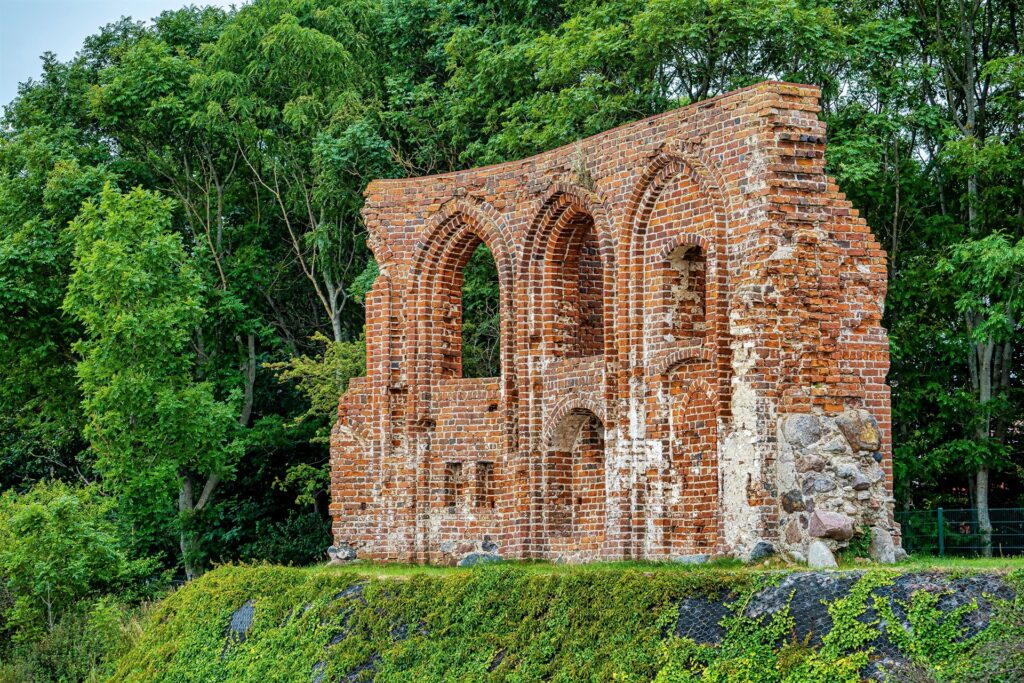
The most recognisable symbol of Trzęsacz is the ruins of the Gothic church, which stand atop a high dune, several dozen metres high. The temple, built in the 15th century, was originally situated as far as 2 kilometres from the seashore. Today, its ruins stand as a unique testament to the power of the Baltic Sea and are one of the most distinctive attractions on the Polish coast.
Despite the work carried out in recent years to stabilise the cliff, experts predict that even what remains of the old church may disappear in the future. That makes it all the more worth visiting this place, whilst you can still appreciate its fascinating history and atmosphere.
For the convenience of visitors, a modern viewing platform was built and opened in spring 2009. The terrace offers a view of the ruins from the sea and allows visitors to admire the monumental cliff line, which looks particularly impressive from this vantage point. It is a must-see on any visit to Trzęsacz.
A visit to the village is also well worth combining with a trip to the Museum of the 15th Meridian, which runs directly through Trzęsacz and defines Central European Time (CET). Right next to it stands a 19th-century palace surrounded by a picturesque park, the origins of which date back over 200 years.